Inside The Architectural Style Of Alys Beach Homes
April 23, 2026
April 23, 2026
If you have ever seen Alys Beach and wondered why it feels so distinct from other coastal communities on 30A, you are not imagining it. The homes here are not simply beach houses painted white. They are part of a carefully planned architectural vision that shapes how you move, gather, rest, and experience the town every day. In this guide, you will get a clear look at what defines the architectural style of Alys Beach homes, what buyers should notice beyond the surface, and why the design feels so cohesive. Let’s dive in.
Alys Beach is best understood as a master-planned coastal town with a highly controlled design language, not a mix of unrelated custom homes. According to the official town overview, the community follows a DPZ CoDesign master plan that organizes residential, commercial, mixed-use, and public spaces in phases.
That planning shows up in the architecture. The town describes its design identity as a blend of restraint, grace, balance, and whimsy, with influences from Bermudian, Moorish, and Guatemalan forms and a strong courtyard-living sensibility. A 2021 feature from Alys Beach notes that the town was founded in 2004, spans 158 acres, and was shaped in part by lessons from nearby communities, especially the goal of creating more privacy while still preserving a shared civic realm.
A common question is whether Alys Beach homes all follow a single architectural style. The short answer is no. Alys Beach is better described as a controlled blend of coastal, Bermudian, Moorish, Mediterranean, Caribbean, and related influences that read as one unified visual language.
That distinction matters if you are evaluating homes here. You are not looking at a neighborhood where each property tries to stand apart through a completely different exterior concept. Instead, the community creates consistency through shared materials, massing, color, and planning, while still allowing individual homes to express personality in layout and interior finishes.
The most recognizable feature of Alys Beach homes is the white exterior palette. The architecture overview from Alys Beach describes the homes as integrally colored white stucco structures influenced by Bermuda, Antigua, Mediterranean, and Moorish architecture.
That white-on-white look is not just aesthetic. Earlier construction guidance from the town explains that the white roofs and walls reflect heat and help keep the community cooler. In a warm coastal climate, that design choice supports both comfort and visual identity.
The architecture feels sculptural because the materials are substantial and consistent. Alys Beach states that every structure features solid masonry roofs and walls and that all homes must meet Fortified for Safer Living standards through its construction program.
This is one of the clearest differences between Alys Beach and many traditional beach communities. Instead of lighter, more casual exterior construction, the homes here have a durable, monolithic quality. That gives the town its signature sense of permanence and clean geometry.
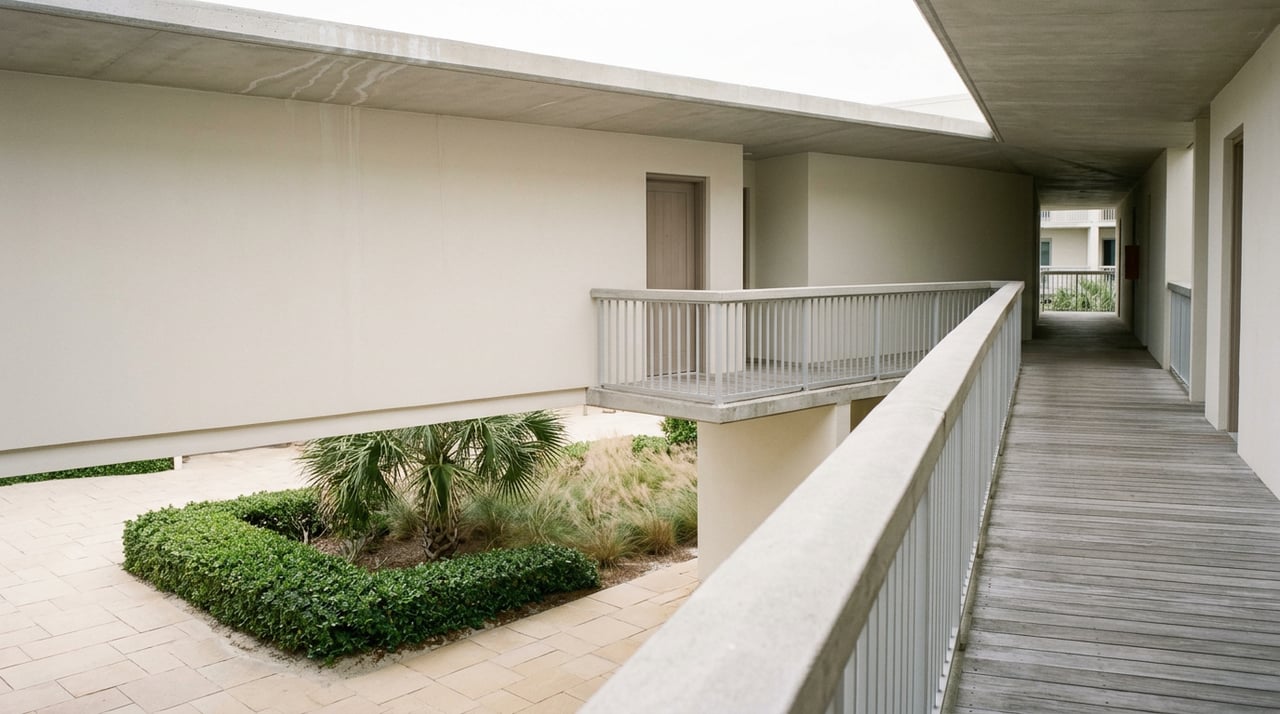
Alys Beach homes tend to rely on massing, proportion, and shadow rather than decorative trim. You will notice crisp rooflines, strong walls, arched passages, and simple but striking forms. The result is a streetscape that feels calm and composed rather than busy.
For buyers, this often translates into architecture that photographs beautifully but also feels intentional in person. Light, shade, and texture do much of the visual work. The homes do not need a long list of exterior embellishments to make an impression.
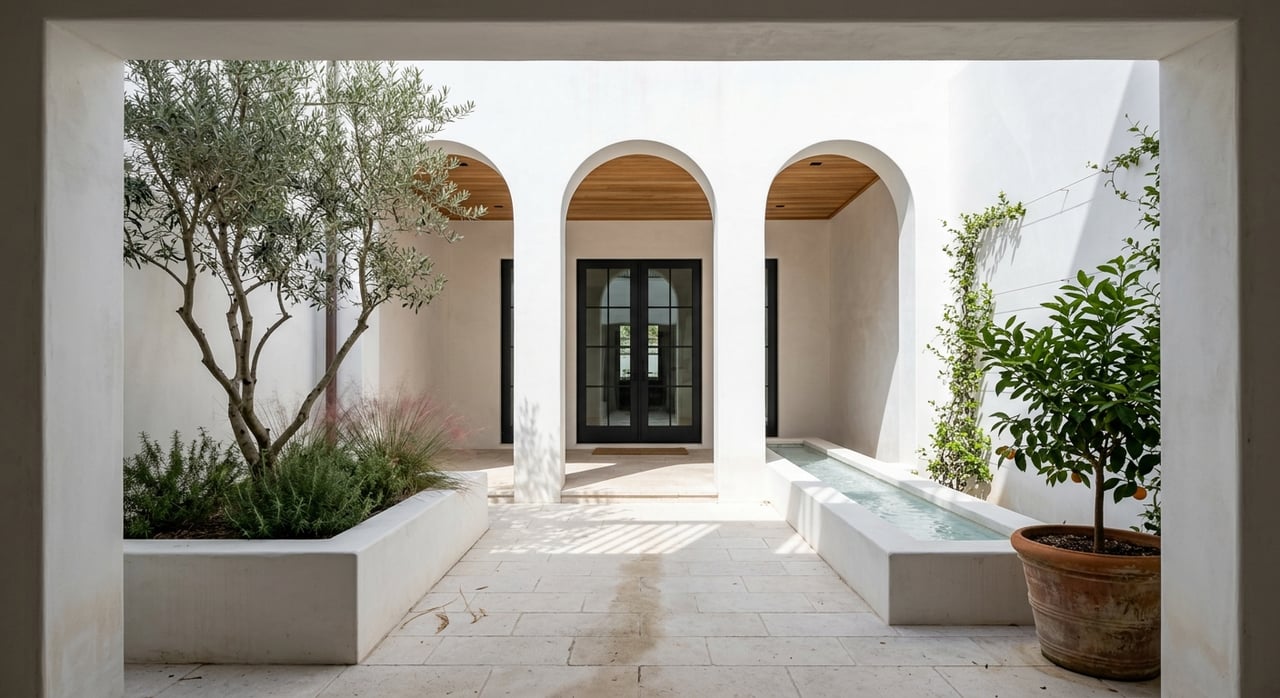
If there is one design feature that defines life inside an Alys Beach home, it is the courtyard. Alys Beach says that every house has a courtyard, often with a pool and or fountain, and that these spaces help provide privacy, cross ventilation, and outdoor living in warm weather, as explained in this official design feature.
That point is important if you are comparing Alys Beach to other luxury coastal markets. In many communities, outdoor space is a bonus. In Alys Beach, it is a core part of the floor plan. The courtyard acts as an outdoor room, a source of natural light, and a buffer between private life and the public streetscape.
Courtyard-centered design changes how rooms connect. Instead of orienting every main space directly to the street, homes often open inward first. That creates a more private living experience, even within a walkable and active community.
The town also notes that gates and covered hallways help mark the transition between retreat and social life. In practical terms, you get a layered arrival sequence. That can make the home feel more sheltered and serene once you step inside.
Official home features highlighted by Alys Beach show how this idea plays out in real properties. Some homes use accordion doors to open a great room into a covered balcony-like space, while others include courtyard fountains, covered stairs, roof decks, tower rooms, built-in daybeds, or two-story courtyard porches, as shown in featured home coverage.
The takeaway is simple: these homes are designed as layered living environments. They encourage shade, breezes, privacy, and easy transitions between interior rooms and outdoor spaces throughout the day.
One of the most interesting parts of Alys Beach architecture is the contrast between the outside and the inside. From the street, the homes speak in a disciplined, unified language. Inside, however, the expression can vary quite a bit from one property to the next.
Alys Beach feature coverage shows interiors with limestone floors, antique cypress, patterned cement tile, white oak beams, Venetian plaster, coral stone tile, glossy white plaster, and other natural materials, as noted in this Town & Country feature summary. That means two homes can share the same community design DNA while delivering very different interior moods.
While every home is different, there are several common themes buyers often see in Alys Beach residences:
If you value a home that feels clean and architectural on the outside but warm and customized on the inside, this is part of the appeal.
Another misconception is that Alys Beach is made up of one home type. In reality, the product mix includes condominiums, brownstones, freestanding villas, and fully custom homes, according to official feature content from the town.
That range matters for buyers because it creates different ownership options within the same overall design environment. You may be drawn to the lock-and-leave simplicity of a condo or brownstone, or you may prefer a detached villa or custom home with more private outdoor space. The exterior identity remains cohesive across those choices.
Architecture in Alys Beach is not only about the homes themselves. It is also about how the homes relate to streets, paths, greens, and public gathering places. The community overview says the town was designed for the pedestrian, with homes, restaurants, shops, and amenities just steps or a short bike ride apart.
The Town Center pairs boutiques and restaurants with fountain and green space, and the Amphitheatre anchors the heart of town. That means the experience of owning in Alys Beach includes not just private architecture, but also a carefully curated public realm.
The street system is part of the town's planning logic. Alys Beach's construction brochure explains that the network of streets and paths makes walking and biking the preferred ways to get around.
The same brochure notes that the cobblestone streets are hand-set in gravel so that about one-third of rainfall can filter into the ground. For buyers, that is a reminder that the community's design choices are both visual and functional.
Although Alys Beach is known for its striking streetscapes, privacy is still a major part of the design. The official photography policy states that Alys Beach is a private community of private residences and common spaces, with homes on private streets.
That policy helps clarify something many visitors sense right away. The beauty of Alys Beach is highly visible, but it is also intentionally protected. The architecture is meant to support everyday living for owners and guests, not casual public touring around private entries, staircases, and courtyards.
For many buyers, Alys Beach stands out because it offers something rare on the coast: a strong sense of visual order without sacrificing individuality. The architecture feels distinctive, but it is also practical. White stucco exteriors, masonry construction, courtyard layouts, and walkable planning all work together to shape daily life.
If you are considering a home here, it helps to look beyond the iconic white facades. Pay attention to how each property handles privacy, light, outdoor living, circulation, and interior finish level. In Alys Beach, those details often tell you as much as the curb appeal.
When you compare properties in Alys Beach, focus on the features that most affect how the home lives day to day:
These points can help you evaluate not just style, but fit.
If you are exploring Alys Beach and want clear guidance on how specific homes compare from both a lifestyle and value perspective, the team at Enslen Coastal Group can help you evaluate the details with the discretion and precision this market deserves.
Stay up to date on the latest real estate trends.
Get In Touch With Our Team To Learn More